Ralph Waldo Emerson

Men love to wonder, and that is the seed of science.
LIM SZU CHING EL-N05 D20102045337

15.11.11

Technology (3) Amazing Honda Commercial

Amazing Honda Commercial

Enjoy this amazing commercial made by Honda as part of an advertising campaign. The ad is based on the classic domino idea where one object knocks over the next and so on.

Of course in this case Honda have taken it to a completely different level using all kinds of car parts to make a memorable video clip that apparently took hundreds of takes to complete with no computer generated effects used at all.


13.11.11

Technology (2) 3D TV - How does it Work?

3D TV - How does it Work?

3D TV is becoming a popular choice for moviegoers as well as buyers in the TV market but how does it actually work?

Enjoy this technology video from Panasonic Australia that helps explain in simple language how your eyes see the world in 3D and how this is adapted to 3D television in both LCD and plasma formats.


10.11.11

Technology (1) Siri iPhone Personal Assistant

Siri iPhone Personal Assistant
Get an introduction to some of the handy capabilities of the Siri personal assistant on the Apple iPhone with this technology video.

Using natural language and impressive AI, Siri can send messages, make calls, search for nearby restaurants, give important reminders and much more. Siri is an exciting technology for smartphone users and especially useful for the blind who can make the most of Siri’s functions to make them more independent and their everyday life that much easier.


8.11.11

Fun Facts of Space

Space Facts
Read some fun space facts for kids and find out more about astronomy, the Moon, planets, our Sun, the Milky Way galaxy, our Universe and much more.
Children will love the cool, crazy, strange, funny, weird, odd, bizarre and wacky information as well as did you know facts and other interesting space info that will help them learn a thing or two along the way.
  • The Sun is over 300000 times larger than earth.
  • Halley's Comet was last seen in the inner Solar System in 1986, it will be visible again from Earth sometime in 2061 (get your camera ready).
  • Venus is the hottest planet in our solar system with a surface temperature of over 450 degrees celcius.
  • Many scientists believe that an asteroid impact caused the extinction of the dinosaurs around 65 million years ago.
  • The Solar System formed around 4.6 billion years ago.
  • The Moon appears to have more craters and scars than Earth because it has a lot less natural activity going on, the Earth is constantly reforming its surface through earthquakes, erosion, rain, wind and plants growing on the surface, while the moon has very little weather to alter its appearance.
  • Saturn isn't the only ringed planet, other gas giants such as Jupiter, Uranus and Neptune also have rings, they are just less obvious.
  • Footprints and tyre tracks left behind by astronauts on the moon will stay there forever as there is no wind to blow them away.
  • In 2006, astronomers changed the definition of a planet. This means that Pluto is now referred to as a dwarf planet.
  • Because of lower gravity, a person who weighs 100kg on earth would only weigh 38kg on the surface of Mars.
  • The only planet that rotates on its side like a barrel is Uranus. The only planet that spins backwards relative to the others is Venus.

  • Some of the fastest meteoroids can travel through the solar system at a speed of around 42 kilometres per second (26 miles per second).
  • The first man made object sent into space was in 1957 when the Russian satellite named Sputnik was launched.
  • Jupiter's 4 biggest moons are named Europa, Ganymede, Callisto and Io.
  • It is because of the Sun & Moons gravity that we have high & low tides.

6.11.11

Fun Facts of Animals - PEGUINS


Fun Penguin Facts for Kids
Enjoy our fun penguin facts for kids. Learn about the Emperor Penguin, King Penguin, Crested Penguin, Little Blue Penguin, Chinstrap Penguin and more. Read on to find out what makes penguins unique members of the animal kingdom.


  • Penguins are flightless birds.
  • While other birds have wings for flying, penguins have adapted flippers to help them swim in the water.
  • Most penguins live in the Southern Hemisphere.
  • The Galapagos Penguin is the only penguin specie that ventures north of the equator in the wild.


  • Large penguin populations can be found in countries such as New Zealand, Australia, Chile, Argentina and South Africa.
  • No penguins live at the North Pole.
  • Penguins eat a range of fish and other sealife that they catch underwater.
  • Penguins can drink sea water.
  • Penguins spend around half their time in water and the other half on land.


  • The Emperor Penguin is the tallest of all penguin species, reaching as tall as 120 cm (47 in) in height.
  • Emperor Penguins can stay underwater for around 20 minutes at a time.
  • Emperor Penguins often huddle together to keep warm in the cold temperatures of Antarctica.
  • King Penguins are the second largest penguin specie. They have four layers of feathers to help keep them warm on the cold subantarctic islands where they breed.
  • Chinstrap Penguins get their name from the thin black band under their head. At times it looks like they’re wearing a black helmet, which might be useful as they’re considered the most aggressive type of penguin.


  • Crested penguins have yellow crests, as well as red bills and eyes.
  • Yellow eyed penguins (or Hoiho) are endangered penguins native to New Zealand. Their population is believed to be around 4000.
  • Little Blue Penguins are the smallest type of penguin, averaging around 33 cm (13 in) in height.
  • Penguin’s black and white plumage serves as camouflage while swimming. The black plumage on their back is hard to see from above, while the white plumage on their front looks like the sun reflecting off the surface of the water when seen from below.
  • Penguins in Antarctica have no land based predators.


  • 2.11.11

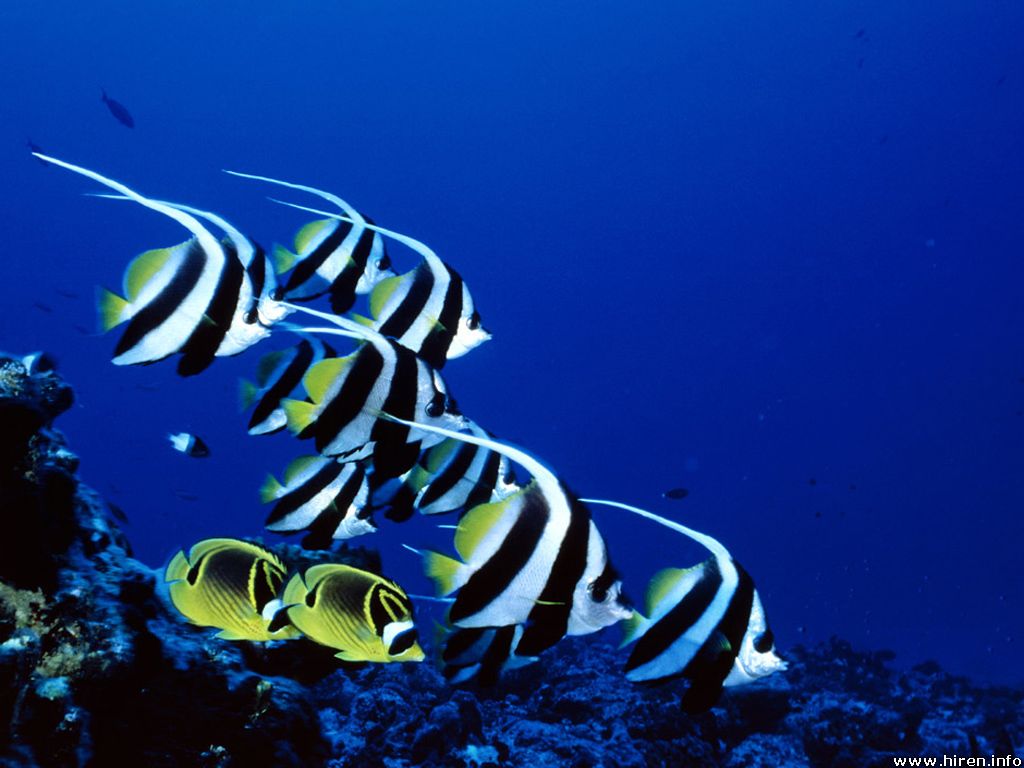
    Fun Facts of Animals - FISHES

    Fun Fish Facts for Kids


    Check out our fun fish facts for kids and learn a wide range of interesting information about fish. What do fish use gills for? How big are their brains? What are cleaner fish? Find out the answers to these questions and much more.
    • Fish are vertebrate animals that live in the water. Vertebrate means they have a spinal cord surrounded by bone or cartilage.
    • Fish have gills that extract oxygen from the water around them.
    • There are over 30000 known species of fish.
    • Some flatfish use camouflage to hide themselves on the ocean floor.
    • Tuna can swim at speeds of up to 70 kph (43 mph).
    • Relative to their body size, fish have small brains compared to most other animals.
    • Fish are covered in scales which are often covered in a layer of slime to help their movement through water.
    • Cleaner fish help out other fish by removing parasites and dead skin from their scales.
    • Although jellyfish and crayfish have the word ‘fish’ in their name, they aren’t actually fish.
    • Over 1000 fish species are threatened by extinction.
    • Mermaids are mythological creatures with the tail of a fish and the upper half of a woman.

    24.10.11

    Fun Facts of Animals - CATS

    Fun Cat Facts for Kids
    Check out these fun cat facts for kids. Learn about cats as pets, their unique behavior, how long they sleep and much more.
    Read on and enjoy the wide range of interesting facts about cats and kittens.
    •  Cats are one of, if not the most, popular pet in the world.
    • There are over 500 million domestic cats in the world.
    • Cats and humans have been associated for nearly 10000 years.
    • Cats conserve energy by sleeping for an average of 13 to14 hours a day.
    • Cats have flexible bodies and teeth adapted for hunting small animals such as mice and rats.
    • A group of cats is called a clowder, a male cat is called a tom, a female cat is called a molly or queen while young cats are called kittens.
    • Domestic cats usually weight around 4 kilograms (8 lb 13 oz) to 5 kilograms (11 lb 0 oz).
    • The heaviest domestic cat on record is 21.297 kilograms (46 lb 15.2 oz).
    • Cats can be lethal hunters and very sneaky, when they walk their back paws step almost exactly in the same place as the front paws did beforehand, this keeps noise to a minimum and limits visible tracks.
    • Cats have powerful night vision, allowing them to see at light levels six times lower than what a human needs in order to see.
    • Cats also have excellent hearing and a powerful sense of smell.
    • Older cats can at times act aggressively towards kittens.


    • Domestic cats love to play, this is especially true with kittens who love to chase toys and play fight. Play fighting among kittens may be a way for them to practice and learn skills for hunting and fighting.
    • On average cats live for around 12 to 15 years.
    • Cats spend a large amount of time licking their coats to keep them clean.
    • Feral cats are often seen as pests and threats to native animals.